Shopping for a car vacuum usually starts with one question: cord or no cord? Both types clean a car interior, but they solve different problems. A corded machine gives you steady power for as long as you need it. A cordless handheld gives you a vacuum you will actually grab when there are crumbs on the seat. This guide compares the two honestly, so you can pick the one that fits how you really clean your car.
Quick verdict: If you mostly do quick, frequent clean-ups and want something that lives in the trunk, a cordless handheld is the more practical choice. If you regularly tackle heavy jobs such as sand-packed carpets, heavy pet hair or a neglected work truck, a corded vacuum or shop vac is stronger and never runs out of battery. Many drivers get the best results with both: a cordless handheld for weekly upkeep and a corded or car wash vacuum for the occasional deep clean.
How Corded and Cordless Car Vacuums Work
All car vacuums work the same basic way: a motor spins a fan that creates low pressure, pulling air and debris through a nozzle into a bin or bag, with a filter catching fine dust before the air is exhausted. The difference is where the power comes from.
- Corded household vacuums and shop vacs plug into a wall outlet. They typically have larger motors and bigger collection tanks, but you need an outlet within reach of the car, and often an extension cord.
- 12V corded car vacuums plug into the car’s accessory socket. They are portable and never need charging, but their power is limited by what the socket can safely supply, and the cord has to reach every corner of the cabin.
- Cordless handheld car vacuums run on a built-in rechargeable battery. They are compact and free to move anywhere, but every charge gives you a fixed amount of runtime.
If you are weighing specific models rather than categories, our guide to choosing a handheld car vacuum walks through suction, filters, attachments and battery features in detail.
Power and Suction: Where Corded Still Has the Edge
On raw, sustained power, a good corded vacuum, especially a wall-powered shop vac, generally has the advantage. It is not limited by battery size or weight, so manufacturers can use larger motors and keep them running at full output for as long as the job takes. That matters for ground-in sand, gravel in floor mats and heavily soiled carpets.
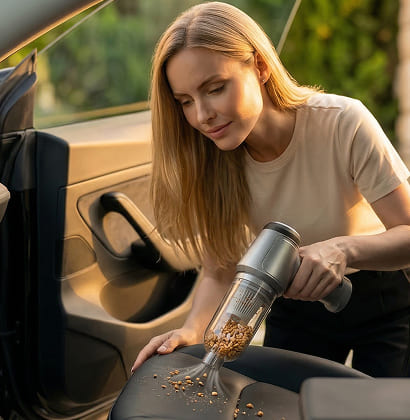
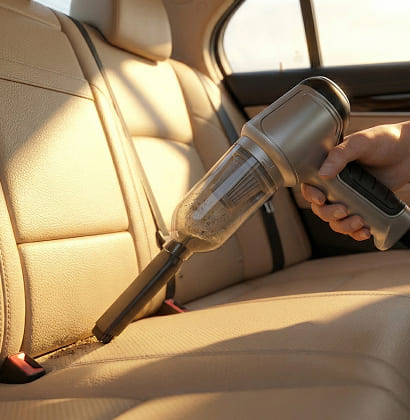
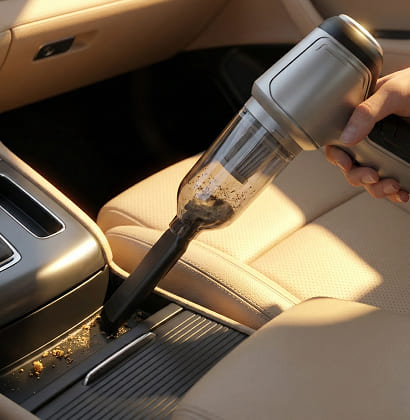
Cordless handhelds have improved a lot thanks to brushless motors and better batteries, and many are more than strong enough for everyday crumbs, dust, dirt, leaves and pet hair on seats and mats. For example, Otopulito’s cordless handheld uses a brushless motor rated at 12,000 Pa of suction, which handles routine interior cleaning well.
One honest caveat: suction figures in Pascals (Pa) are not always comparable across brands. Manufacturers may measure under different conditions, at different points in the airflow, or at a peak setting rather than the normal one. Airflow, nozzle design and filter condition also affect real-world pickup. Use Pa ratings as a rough guide, not a precise ranking, and pay attention to how a vacuum performs on the kind of mess you actually deal with.
Runtime: Unlimited vs. Per Charge
This is the clearest difference between the two types.
- Corded: Runtime is effectively unlimited. You can work through every seat, footwell and the trunk without stopping. With a 12V model, keep in mind that running it for a long time with the engine off can drain the car battery.
- Cordless: Runtime depends on the battery and the power setting. Higher settings use the battery faster. A cordless vacuum is ideal for focused sessions such as the front footwells, the seats or the trunk, but a full, thorough detail of a very dirty vehicle may take more than one charge.
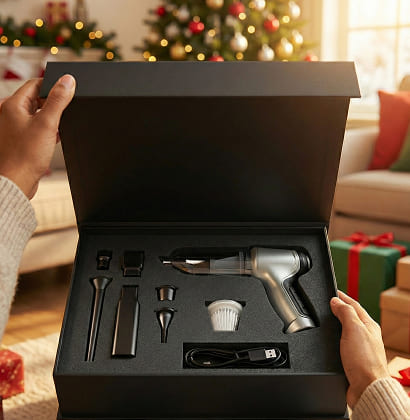
Charging convenience helps close the gap. Our handheld offers up to 30 minutes per charge and recharges over USB-C from a car charger, a wall adapter or a power bank.
Convenience and Storage
Convenience is where cordless handhelds shine, and it matters more than it sounds. The best vacuum is the one you actually use, and a lightweight cordless handheld removes almost every excuse:
- No setup: no hunting for an outlet, no unwinding cords, no dragging a canister across the driveway.
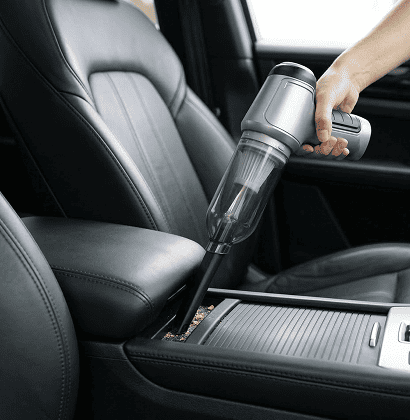
- Easy reach: you can get under seats, between console gaps and into door pockets without a cord snagging on the seat rails or wrapping around the headrests.
- Use it anywhere: in a parking garage, at school pickup or on a road trip, with no power source needed.
- Compact storage: a handheld fits in a trunk organizer or a small case, so it is with you when spills happen.
Corded shop vacs take up more garage space, and 12V corded models come with a cord that needs to be wound up and stored. Neither is a dealbreaker, but they make quick clean-ups less likely to happen. For a simple routine that keeps mess from building up, see our weekly routine for keeping your car clean.
Paint and Interior Safety
A trailing cord or hose can rub against door sills, door edges and paint as you move around the car, and a heavy canister can bump into bodywork. Draping the cord over your shoulder and keeping the canister away from the car avoids most of this.
Cordless handhelds remove the cord from the equation, which lowers the risk of scuffs. Whatever you use, choose soft brush attachments for delicate surfaces like dashboards, screens and trim, and keep hard plastic nozzles off glossy panels. A set of crevice, brush and wide nozzles covers most interior surfaces without needing to press hard.
Cost Over Time
There is no automatic winner on cost. Prices vary widely in both categories, and the real cost depends on how you use the vacuum:
- Corded: No battery to wear out, and many households already own a shop vac. Coin-operated car wash vacuums are another option for occasional deep cleans, but those costs add up if you rely on them often.
- Cordless: Rechargeable batteries gradually lose capacity over years of use, as all lithium-ion batteries do. On the other hand, regular quick clean-ups can mean fewer paid detailing visits and less wear on carpets and upholstery, because dirt gets removed before it is ground in.
- Filters: Look for a washable filter, such as a dual-layer HEPA filter you can rinse and reuse once it dries completely.
Cordless vs. Corded Car Vacuum: Side-by-Side Comparison
| Factor | Cordless handheld | Corded (12V or wall/shop vac) |
|---|---|---|
| Sustained power | Good for everyday debris | Usually stronger, especially shop vacs |
| Runtime | Limited per charge | Unlimited (watch car battery with 12V) |
| Setup time | Grab and go | Find power, unwind cord or hose |
| Reach inside the car | Free movement, no cord | Limited by cord and hose length |
| Storage | Compact, fits in the trunk | Bulkier; cord to manage |
| Paint safety | No trailing cord | Cord or hose can rub if careless |
| Best for | Frequent quick clean-ups | Heavy, infrequent deep cleans |
Who Should Choose Which?
Choose a cordless handheld if you:
- Want to clean little and often, such as crumbs after a drive-through or sand after the beach
- Do not have an outlet near where you park, such as in an apartment lot or street parking
- Want a vacuum that stays in the car and is ready when you need it
- Value light weight and easy handling over maximum power
Choose a corded vacuum or shop vac if you:
- Regularly deal with heavy dirt, gravel, sand-packed carpets or a work vehicle
- Do long, thorough detailing sessions and do not want to stop for a recharge
- Have a garage or driveway with an outlet close to the car
Consider both if you:
Want a consistently clean car with less effort. A cordless handheld handles weekly upkeep, and a shop vac or car wash vacuum handles a few deep cleans a year. Our step-by-step guide to deep cleaning your car interior shows how to tackle those bigger sessions, while why a mini handheld vacuum belongs in every cleaning kit explains how a small vacuum fits into a detailing routine.
Frequently Asked Questions
Is a cordless car vacuum strong enough for a car interior?
For most everyday messes, yes. A cordless handheld with a brushless motor and good attachments handles crumbs, dust, dirt and loose pet hair on seats and mats. For deeply embedded dirt or very neglected carpets, a corded shop vac is usually more effective.
Are 12V corded car vacuums a good middle ground?
They can be. They do not need charging and run as long as the car supplies power, which makes them handy on road trips. The trade-offs are limited power from the accessory socket, a cord that can get in the way, and the risk of draining the car battery if you run one for a long time with the engine off.
Can I compare vacuums by their Pa rating?
Only loosely. Pa ratings show suction pressure, but brands do not always measure them the same way, and airflow, nozzle design and filter condition also affect pickup. Treat Pa as one factor alongside runtime, filtration and attachments.
How do I keep a cordless car vacuum working well?
Empty the bin after each use, rinse a washable filter regularly and let it dry fully before reinstalling, and recharge the battery after use so it is ready next time. A clean filter keeps suction consistent.
The Bottom Line
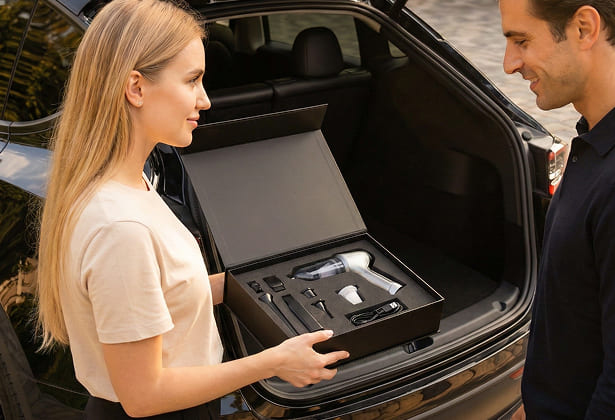
Corded vacuums win on sustained power and unlimited runtime, which makes them the right tool for heavy, infrequent deep cleans. Cordless handhelds win on convenience, storage and how often you will actually use them, which is what keeps a car clean week to week. If you want a cordless handheld for everyday upkeep, the Otopulito vacuum combines a brushless motor, USB-C charging, a washable HEPA filter and three nozzles in a magnetic gift box with foam slots that stores easily in the trunk. See Otopulito on Amazon, or visit our homepage to learn more.